Contact Us


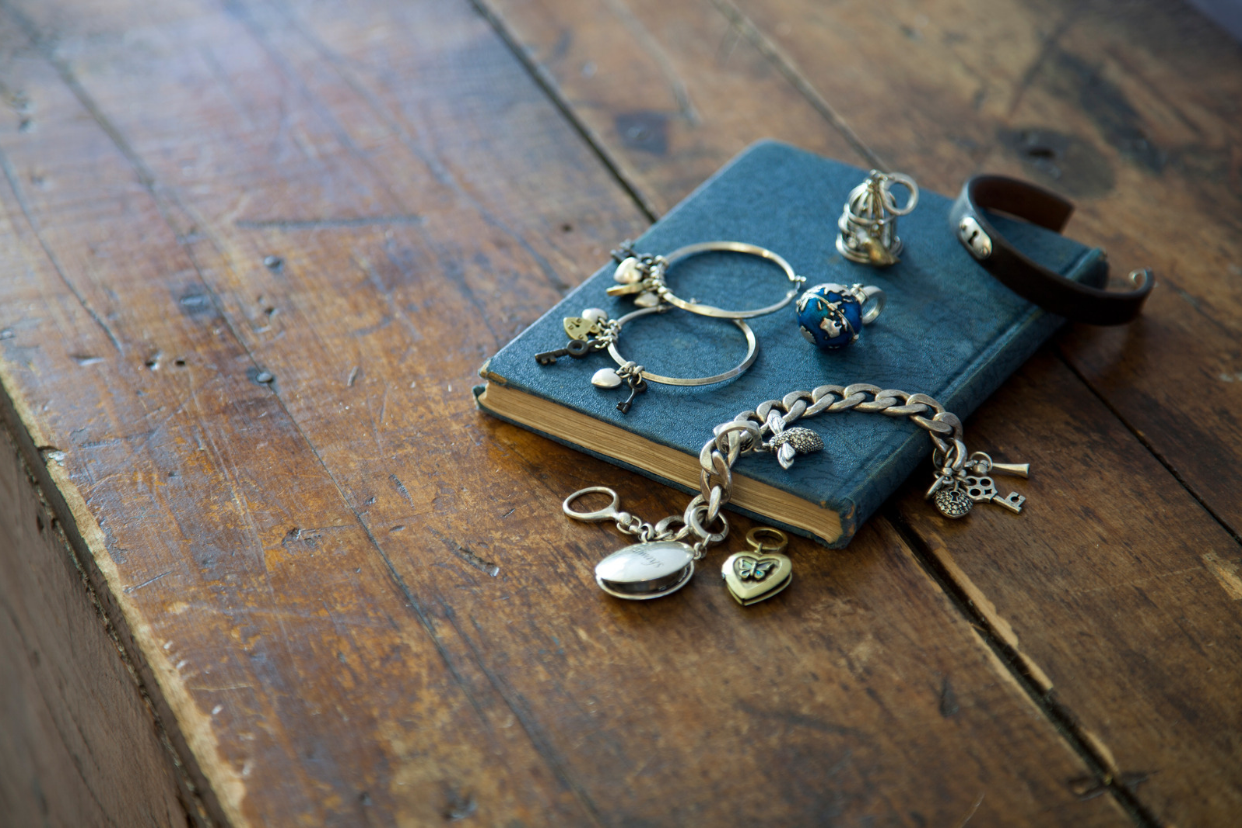
If you’ve ever shopped for secondhand jewelry, browsed an estate sale, or tried to learn more about an inherited piece, you’ve probably come across the terms vintage, antique, and estate. They may sound interchangeable, but each one tells you something different about a piece of jewelry.
Understanding those differences can help you better identify what you’re looking at and what its age and ownership history may mean for its value and collectibility.
What’s the Difference Between Vintage, Antique, and Estate Jewelry?
The biggest difference between vintage, antique, and estate jewelry comes down to age and previous ownership. Vintage and antique describe how old a piece is, while estate describes whether it has been previously owned.
|
Term |
What It Means |
Does It Have to Be Previously Owned? |
|
Vintage Jewelry |
Generally 20-99 years old |
No |
|
Antique Jewelry |
At least 100 years old |
No |
|
Estate Jewelry |
Any previously owned jewelry, regardless of age |
Yes |
Some jewelry items can fall into two of these categories. A previously owned ring from the 1950s can be both vintage and estate jewelry, while a previously owned Victorian brooch can be both antique and estate jewelry. It’s also important to remember that none of these labels automatically determines value. Age and ownership are only part of the equation. Materials, gemstones, maker, craftsmanship, rarity, condition, and demand can all influence what a piece is worth.
What is Vintage Jewelry?
Vintage jewelry generally refers to jewelry that is at least 20 years old but not yet 100 years old. In 2026, jewelry made from approximately 1927 through 2006 could therefore fall within the vintage category, although there is no single universally enforced definition of “vintage” within the jewelry industry.
Vintage jewelry can include pieces associated with recognizable periods and trends, such as:
- Mid-century jewelry from the 1940s through 1960s
- Bold gold and statement jewelry from the 1970s
- Large-scale and colorful designs from the 1980s
- Designer jewelry from the 1990s
- Pieces from the early 2000s
The vintage jewelry meaning refers primarily to age, not value. A piece doesn’t automatically become valuable simply because it is vintage.
What is Antique Jewelry?
Antique jewelry is jewelry that is at least 100 years old. In 2026, a piece generally needs to date to 1926 or earlier to qualify as antique. Antique jewelry is often identified by its materials, construction methods, hallmarks, gemstone cuts, and design characteristics.
Some of the major periods encountered when identifying antique jewelry include:
Georgian Jewelry – Georgian jewelry dates roughly from 1714 to 1837. Any surviving pieces are relatively rare. These pieces were almost always handcrafted using techniques that predate modern jewelry making.
Victorian Jewelry – Victorian jewelry dates from 1837 to 1901. Styles changed considerably during Queen Victoria’s reign and included romantic motifs, nature-inspired designs, lockets, cameos, and mourning jewelry.
Edwardian Jewelry – Edwardian jewelry is generally associated with the early 1900s through the 1910s. It is known for delicate designs, intricate metalwork, diamonds, and the use of platinum.
Art Deco Jewelry – Art Deco jewelry emerged during the 1920s and 1930s and is recognized for geometric shapes, symmetry, contrasting materials, and bold designs.
Not every piece of jewelry that resembles these styles was actually made during that period. Jewelry trends are frequently reproduced or revived, so design alone isn’t enough to establish age.
What is Estate Jewelry?
Estate jewelry is any jewelry that has been previously owned. There is no minimum age requirement for estate jewelry. Despite the name, estate jewelry does not have to come from a deceased person’s estate or an estate sale.
For example:
- A previously owned ring from 2020 is estate jewelry.
- A previously owned necklace from 1975 is vintage estate jewelry.
- A previously owned brooch from 1900 is antique estate jewelry.
The term estate describes ownership history. The terms vintage and antique describe age.
How Can You Tell How Old a Piece of Jewelry Is?
Jewelry age can often be estimated by examining its hallmarks, construction, materials, gemstone cuts, and design characteristics.
A professional may examine:
- Metal purity marks
- Maker’s marks
- Country-of-origin marks
- Clasps and closures
- Stone settings
- Gemstone cuts
- Soldering and construction techniques
- Engraving
- Design motifs
- Evidence of previous repairs or alterations
No single characteristic necessarily establishes the age of a piece.
How Do You Know if Vintage, Antique, or Estate Jewelry Is Valuable?
The most reliable way to determine jewelry value is to have the piece professionally evaluated or appraised. This is particularly important if you:
- Inherited jewelry and don’t know its history
- Found jewelry at an estate sale or antique store
- Own a piece with an unfamiliar hallmark
- Suspect a piece contains precious metals or natural gemstones
- Have designer jewelry you want authenticated
- Are considering selling jewelry
- Need a documented value for insurance or estate purposes
The type of evaluation you need depends on what you’re trying to accomplish. A buying evaluation determines what a buyer is willing to pay for your item based on its current market value and resale potential. This amount is typically much lower than the value shown on a written appraisal.
A professional appraisal for insurance or estate purposes estimates the retail replacement value of an item, or approximately what it would cost to replace the piece with a comparable item if purchased new. Because an appraisal serves a different purpose than determining a cash offer, the two values can vary significantly.
Have Your Vintage, Antique, or Estate Jewelry Evaluated in Memphis
Accent Jewelers has bought, sold, evaluated, and appraised jewelry in Memphis since 1989. Our team evaluates gold, silver, platinum, diamonds, gemstones, designer jewelry, luxury watches, coins, and other valuables using professional testing equipment and decades of experience.
If you’re interested in selling a piece, bring it to Accent Jewelers for a no-obligation evaluation. If you accept the offer, you can get paid on the spot or choose double the offer in store credit.
Accent Jewelers also provides professional jewelry appraisals for insurance, estate, and resale purposes.